
The short version
- A session takes about twenty minutes and requires no preparation — no fasting, no numbing cream.
- Applicators sit on the forehead and cheeks; intensity rises gradually over the first seconds.
- You feel warmth plus rhythmic muscle contractions — unfamiliar rather than painful.
- No needles and no recovery period, so most people return to normal activity immediately.
- You will probably not see much after the first session, and that is normal.
Most descriptions of an Emface appointment stop at three words: twenty minutes, comfortable, no downtime. That is accurate and almost useless if you are trying to decide whether to book one. What people actually want to know is what the room looks like, what the sensation is, whether it is strange, and what they are supposed to do while it happens.
Here is the appointment broken down in order, from what you do before you leave the house to what the following week looks like.
Before you arrive: what preparation involves
There is almost nothing to do. No fasting, no numbing cream, no avoiding sun or skincare in the days before. You arrive as you are, and that is genuinely the whole instruction. The one practical detail worth knowing is that clean skin matters for the equipment rather than for hygiene reasons.
In the protocol described in a 2026 study in the Aesthetic Surgery Journal by Frank and colleagues, the treatment area was cleaned with an alcohol solution beforehand specifically to remove surface oils that interfere with applicator contact. So if you are coming from the gym or wearing heavy makeup, expect a wipe-down first. Beyond that, the preparation section of our Emface treatment overview really does say to come as you are.
The first few minutes: placement is the whole game
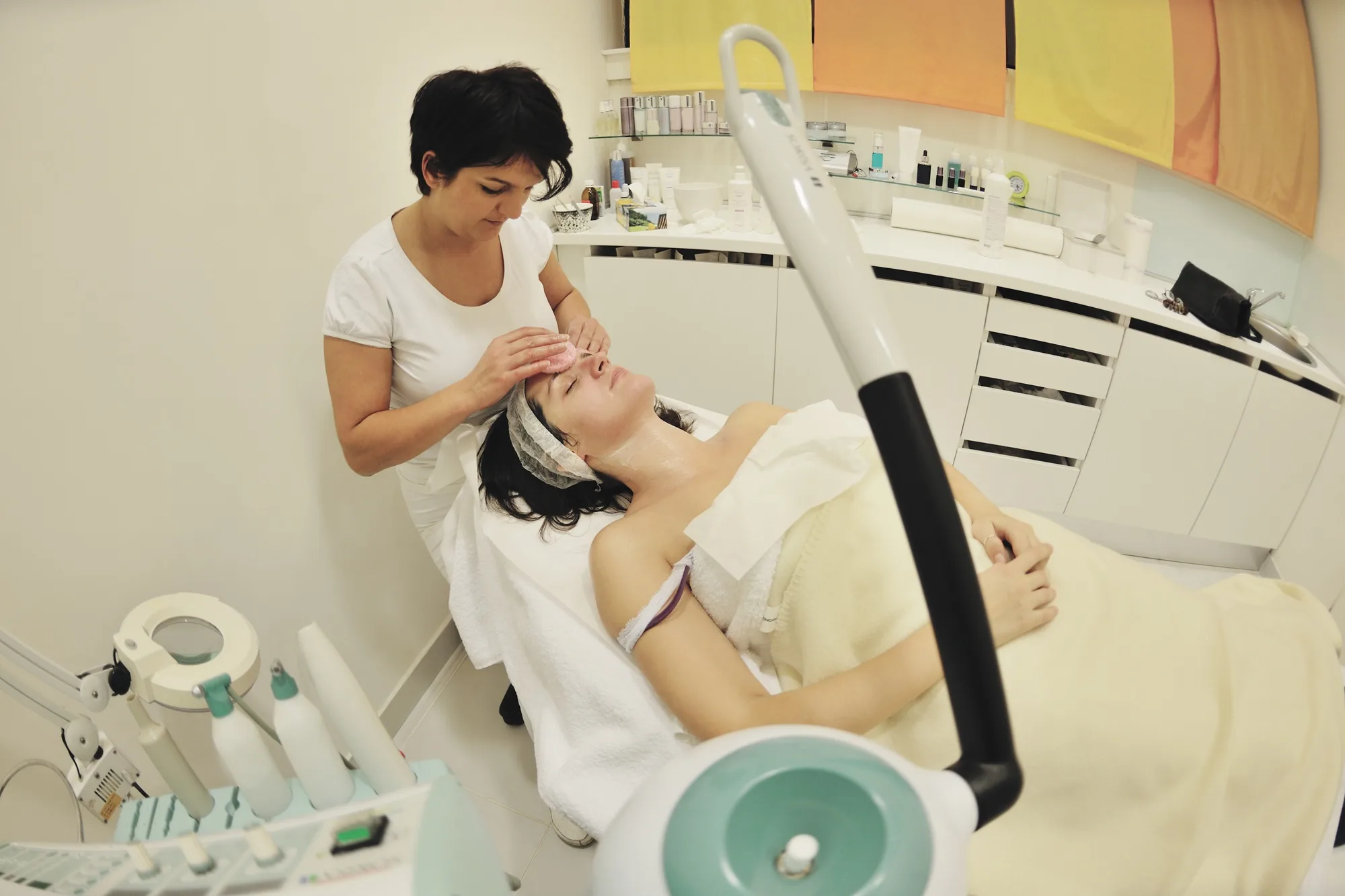
The first few minutes are the part that decides your outcome, and they are also the least dramatic to watch. Applicators are positioned on the forehead and on each cheek, and a neutral electrode is placed elsewhere on the body to complete the circuit. Nothing has happened yet, but where those applicators sit determines which muscles get worked.
This is why placement is not a formality. Emface targets the muscles that lift the face, and those sit in slightly different positions on every person. A clinician who has assessed your face beforehand is adjusting for your anatomy rather than following a diagram. It is worth knowing who performs the treatment before you book, because this is the step where that matters.
Minutes one through twenty: what the energy feels like
Intensity is not switched on at full strength. In the published protocol, the setting was raised toward maximum over roughly the first twenty seconds, giving you time to adjust to the sensation. After that it holds steady for the remainder of the session.
The sensation itself has two layers, because the device delivers two energies at once. The radiofrequency reads as steady warmth spreading across the treated area, similar to a heating pad but more focused. The HIFES energy reads as tapping or pulsing, and you can feel your cheeks and brow contracting rhythmically without doing anything yourself. It is unfamiliar rather than painful. In the 2026 Journal of Cosmetic Dermatology study by Robb and colleagues, eighty-four percent of participants agreed the therapy was comfortable and average discomfort ratings were very low. Our page on how Emface and Exion work explains why both energies run simultaneously rather than in sequence.
You are lying back with nothing to hold and nothing to do. Most people talk, scroll on their phone or close their eyes. Twenty minutes passes faster than expected because the pulsing gives the time a rhythm.
Walking out: what happens immediately after
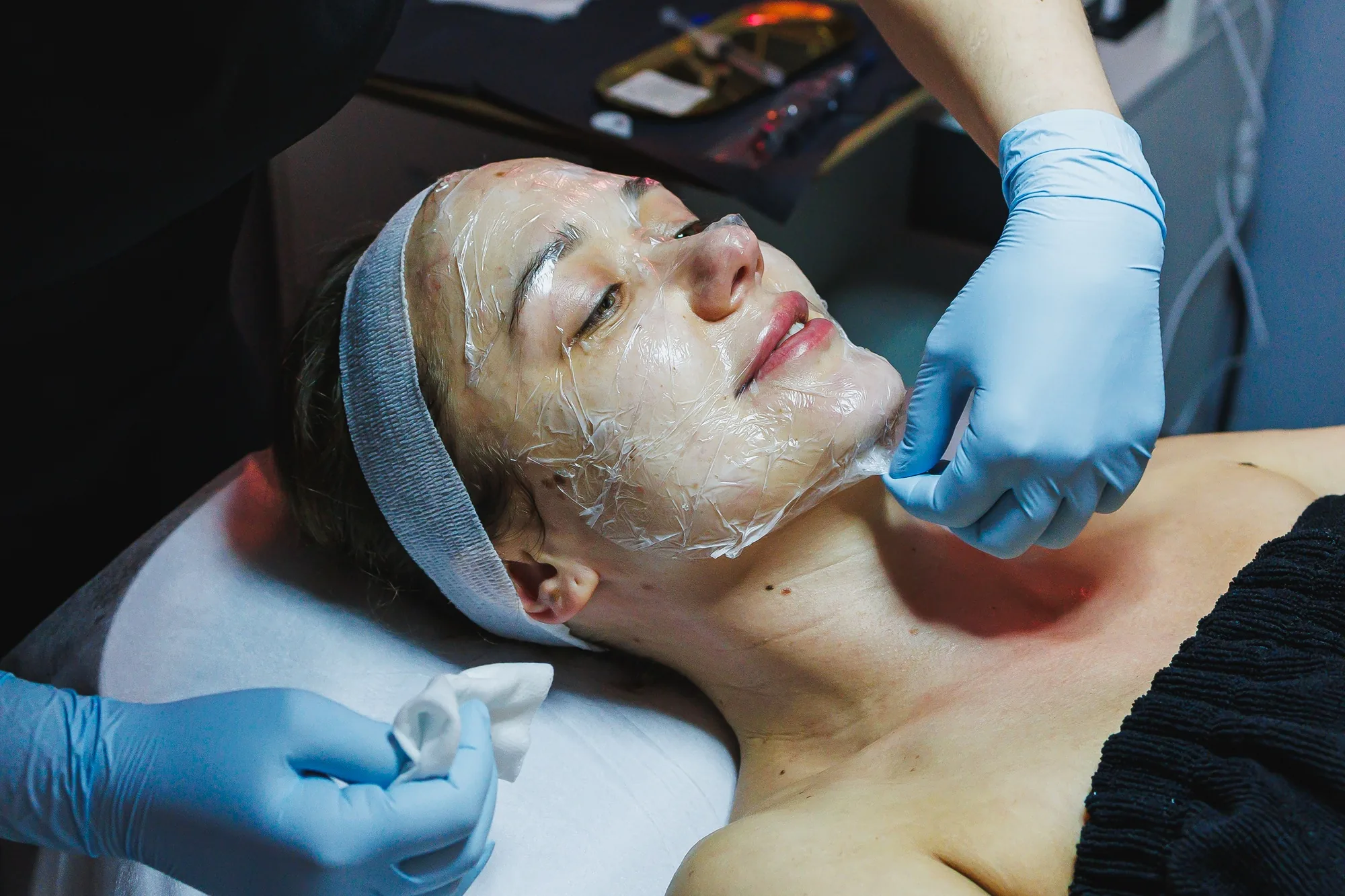
The applicators come off and you leave. There is no recovery room, no bandaging and no aftercare instructions to follow. Some people notice mild redness or a feeling similar to having used facial muscles hard, both of which settle quickly. You can drive, return to work, exercise or reapply makeup right away. This is the practical difference between energy-based treatment and injectables, and it is a large part of why people choose it. If you are weighing that trade-off, how Emface compares with Botox covers the other differences.
The days between sessions
Sessions are usually spaced about a week apart, and the week in between is uneventful by design. There is nothing to monitor and nothing you need to do differently. You will probably not see much after the first session, which is normal and not a sign that it is not working.
Collagen remodeling and muscle adaptation both build slowly, which is why published studies measure outcomes at one and three months rather than immediately. If skin texture and hydration are also on your list, this is a reasonable point to ask whether Exion skin remodeling belongs in your plan alongside Emface.
How the series progresses from session two onward
Sessions two through four are structurally identical to the first. The difference is that a provider paying attention may adjust applicator placement or intensity based on how your muscles responded. Ask whether that assessment happens, because a series of four identical appointments is a different level of care than four adapted ones.
Most plans run four sessions, with results continuing to develop for weeks after the last one. To have your own plan assessed in Orlando, call (689) 282-5599 or request a consultation.
Frequently asked questions
How long does an Emface session take?
Does Emface hurt?
Do I need to do anything to prepare?
Can I go back to work right after?
Will I see anything after the first session?
How many sessions will I need?
Medical note. This article is educational and is not a substitute for professional medical advice, diagnosis or treatment. Emface is not appropriate for everyone and individual experience varies. Your suitability, session count and protocol can only be determined during an in-person evaluation of your health history and facial anatomy.