The short version
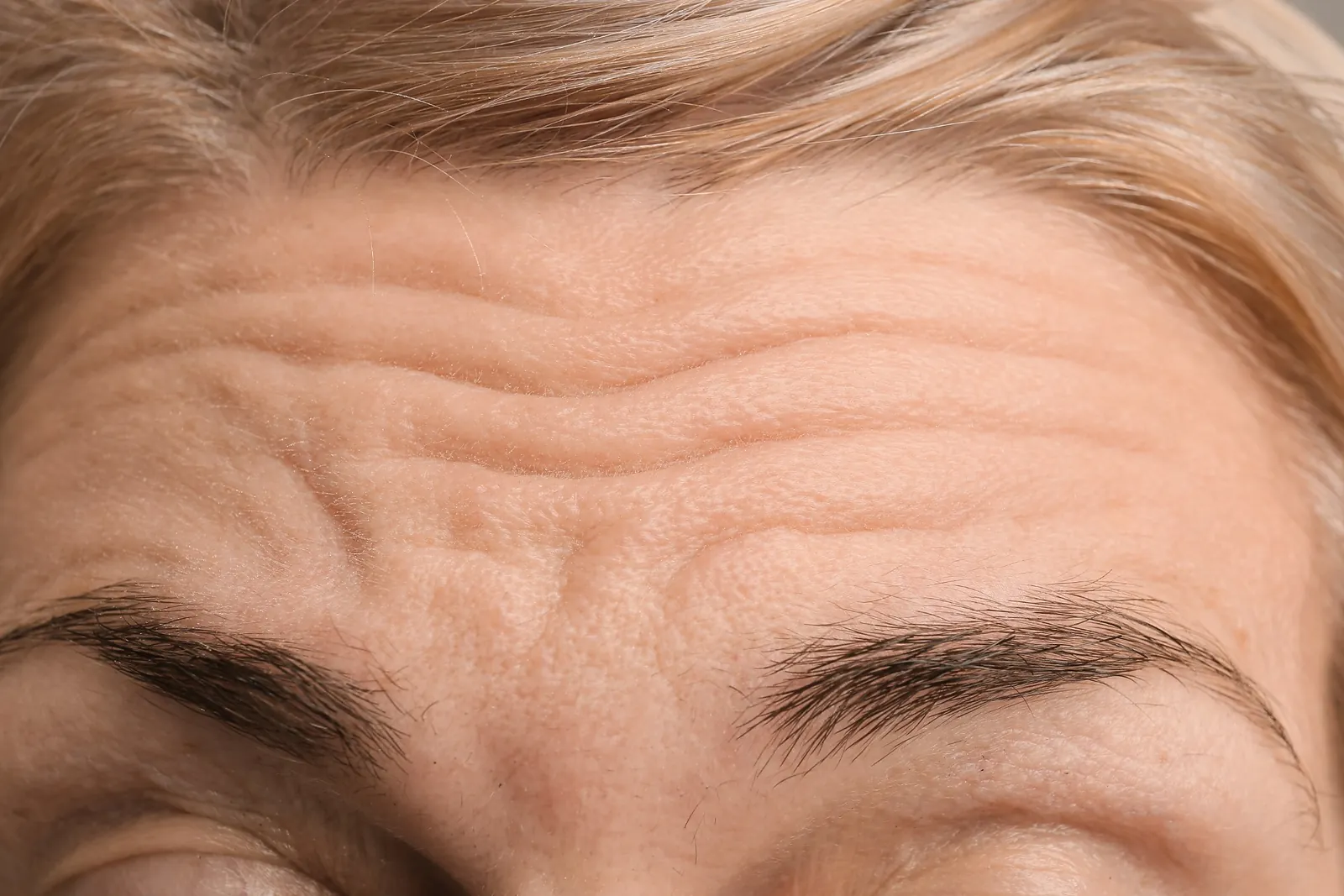
- Forehead wrinkles usually reflect several causes at once: expression, sun exposure, elasticity, genetics and smoking.
- Botox is associated with expression-related lines and is FDA-approved for forehead lines.
- Lines driven by skin quality are a separate piece of the picture, where Exion comes in.
- Which approach, or combination, fits your forehead is decided in a consultation.
This guide covers what commonly causes forehead wrinkles, how Botox relates to one part of that picture at Aesthetic Wellness, and where skin quality, a separate factor, fits in.
None of this is meant to diagnose your own forehead wrinkles or predict a specific outcome. It is meant to give you a general framework for the conversation you would have during a consultation.
What Commonly Causes Forehead Wrinkles
According to MedlinePlus, wrinkles generally come from a combination of factors. The table below summarizes the general categories relevant to forehead wrinkles specifically.
| General cause | General context |
|---|---|
| Repeated facial expressions | Movements like raising the eyebrows contribute to lines forming over time |
| Genetic factors (family history) | A family history of wrinkles is one factor associated with how wrinkles develop |
| Sun exposure | A major contributor to skin changes that lead to wrinkles |
| Skin elasticity changes | Skin naturally becomes thinner and less elastic with age |
| Smoking | Can accelerate the normal aging process of the skin |
Most forehead wrinkles reflect more than one of these factors at once, which is part of why understanding the general categories can help frame a conversation about treatment options.
It can be hard to tell on your own which factor is playing the biggest role in your particular case, especially since expression-related lines and skin-quality changes can overlap and become harder to tell apart over time. This is generally easier for a provider to assess during an in-person consultation than to determine from a mirror at home.
Botox for Expression-Related Forehead Lines
Botox is generally associated with wrinkles caused by repeated facial movement, sometimes called expression lines, rather than wrinkles driven mainly by sun exposure or skin elasticity alone.
Aesthetic Wellness offers Botox among its treatments, and it is FDA-approved specifically for forehead lines caused by frontalis muscle activity, along with glabellar lines and crow's feet. If you are comparing it to a non-injectable option, Emface vs. Botox walks through that difference in more detail.
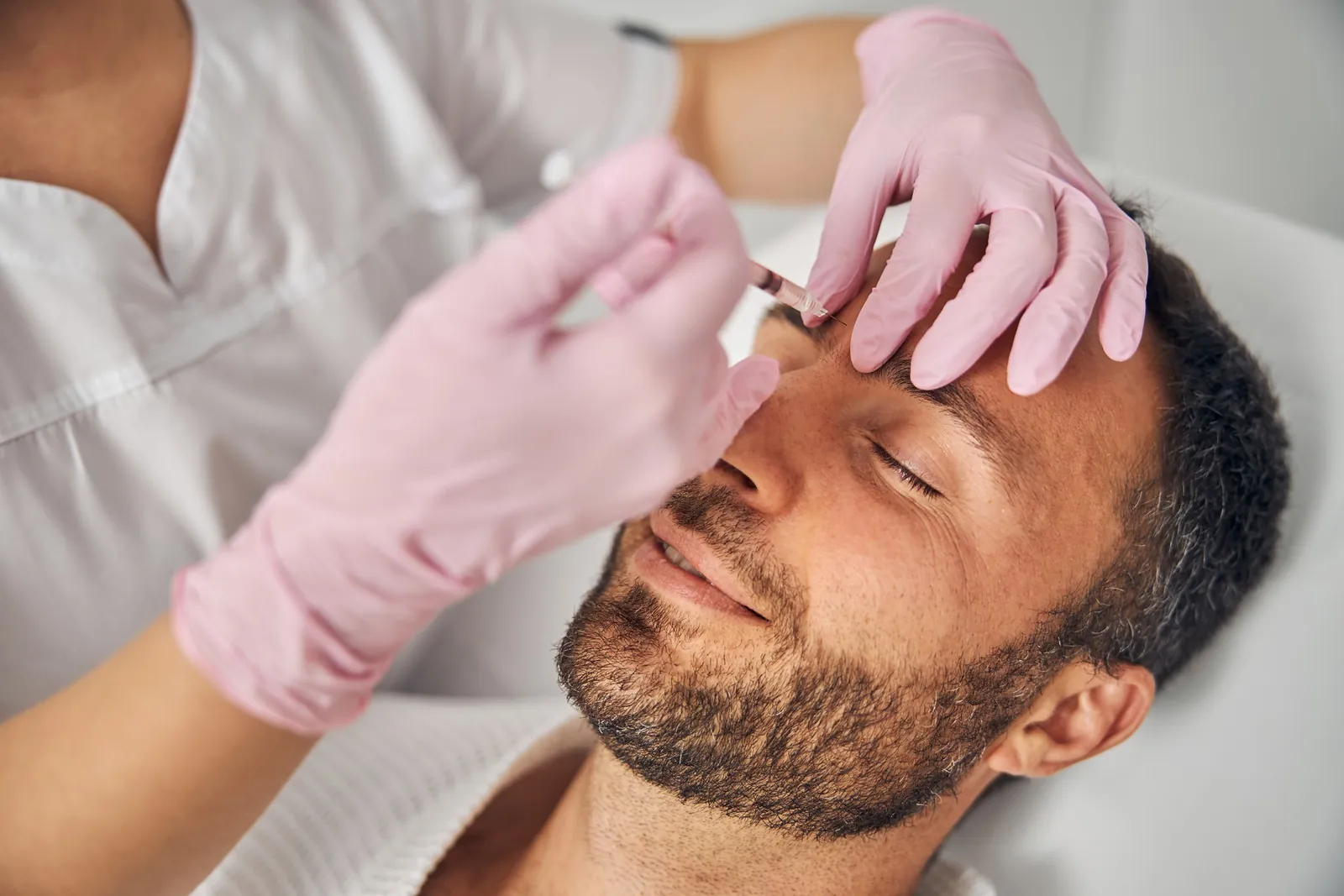
Because expression-related wrinkles form from repeated movement over time, many patients notice them becoming more established the longer those movements continue. Discussing this pattern with the Aesthetic Wellness team, rather than guessing at the cause, is generally the more useful starting point.
Curious which approach fits your forehead wrinkles? Contact Aesthetic Wellness to schedule a consultation.
Skin Quality and Exion
Not every forehead wrinkle is driven mainly by muscle movement. Skin quality factors, like elasticity and texture, are a separate piece of the picture. Exion is a treatment technology Aesthetic Wellness offers for skin tightening, a different mechanism from Botox's muscle-focused approach. Whether it fits your own forehead wrinkles, alongside or instead of Botox, is best discussed during a consultation.
For some patients, forehead wrinkles reflect a mix of both expression-related movement and skin-quality changes, which is one reason more than one treatment technology can come up in the same conversation rather than a single option being the obvious answer from the start.
Frequently asked questions
What causes forehead wrinkles?
Are all forehead wrinkles the same?
Does Botox treat all types of wrinkles?
How do I know if Botox or Exion fits my situation?
Can forehead wrinkles be prevented?
What is the first step to treating forehead wrinkles at Aesthetic Wellness?
Do forehead wrinkles always need more than one type of treatment?
Medical note. This article is educational and is not a substitute for professional medical advice, diagnosis or treatment. Emface, Exion and injectable treatments are not appropriate for everyone, and individual results vary. Suitability, session counts and expected outcomes can only be determined during an in-person evaluation of your health history and facial anatomy.