The short version
- Jowls form from four changes at once: collagen loss, thinning fat pads, bone recession and reduced muscle support.
- A treatment addressing only one of the four will only ever produce partial change.
- Non-surgical options work best on mild to moderate jowling with some elasticity left.
- Filler does not lift jowls — it rebuilds lost structure so the jowl reads as less prominent.
- None of them replicate a facelift, and a provider who says otherwise is overselling.
Jowls are usually the first change people notice that no amount of skincare seems to touch. The jawline that used to be a clean line becomes a soft one, and it tends to show up in photographs before it shows up in the mirror.
The reason topical products do not fix it is that jowling is not a skin surface problem. Understanding what is actually happening underneath is what makes the treatment options make sense, so that is where this starts.
What jowls are, and why they form
Jowls are sagging tissue along the jawline, just in front of and below the chin. Four separate changes contribute, and most people have some combination of all four. Collagen and elastin production declines, so skin loses its ability to recoil. The fat pads in the mid-face thin and descend, so tissue that used to sit over the cheekbone settles lower. The bone of the jaw and mid-face slowly recedes, removing the scaffold underneath. And the facial muscles that hold everything up lose tone.
Genetics sets the timeline. Sun exposure, smoking and significant weight fluctuation accelerate it. That mix matters because a treatment that addresses only one of the four will only ever produce partial change. Our overview of how facial treatments address different tissue layers breaks the layers apart.
Why skincare alone will not lift them
Retinoids, sunscreen and good skincare are worth doing. They improve skin quality, support collagen at the surface and slow further damage, which is real value. What they cannot do is lift descended tissue or replace lost structure, because they act on the epidermis and upper dermis and jowling originates deeper.
The same limitation applies to facial massage, gua sha and facial exercise routines. Evidence that any of them produce lasting lift is limited, and the temporary improvement people notice is generally reduced fluid retention rather than structural change. Where skin quality itself is part of the concern, Exion skin remodeling targets density and texture at a depth topicals cannot reach.
Energy-based treatments: rebuilding the foundation
Energy-based devices heat deeper tissue to trigger new collagen. Radiofrequency and microfocused ultrasound are the two main approaches, and they differ in how deep they reach. Microfocused ultrasound with visualization, marketed as Ultherapy, is FDA-cleared for lifting under the chin and on the neck and reaches the connective tissue layer that surgeons address, according to expert consensus published in the Journal of Cosmetic Dermatology.
Results from any of these develop over months rather than weeks, because collagen remodeling is slow. Expect firming and improved definition rather than elimination. They perform best when jowling is mild to moderate and skin still has some elasticity left to work with.
Working the muscles that support the jawline
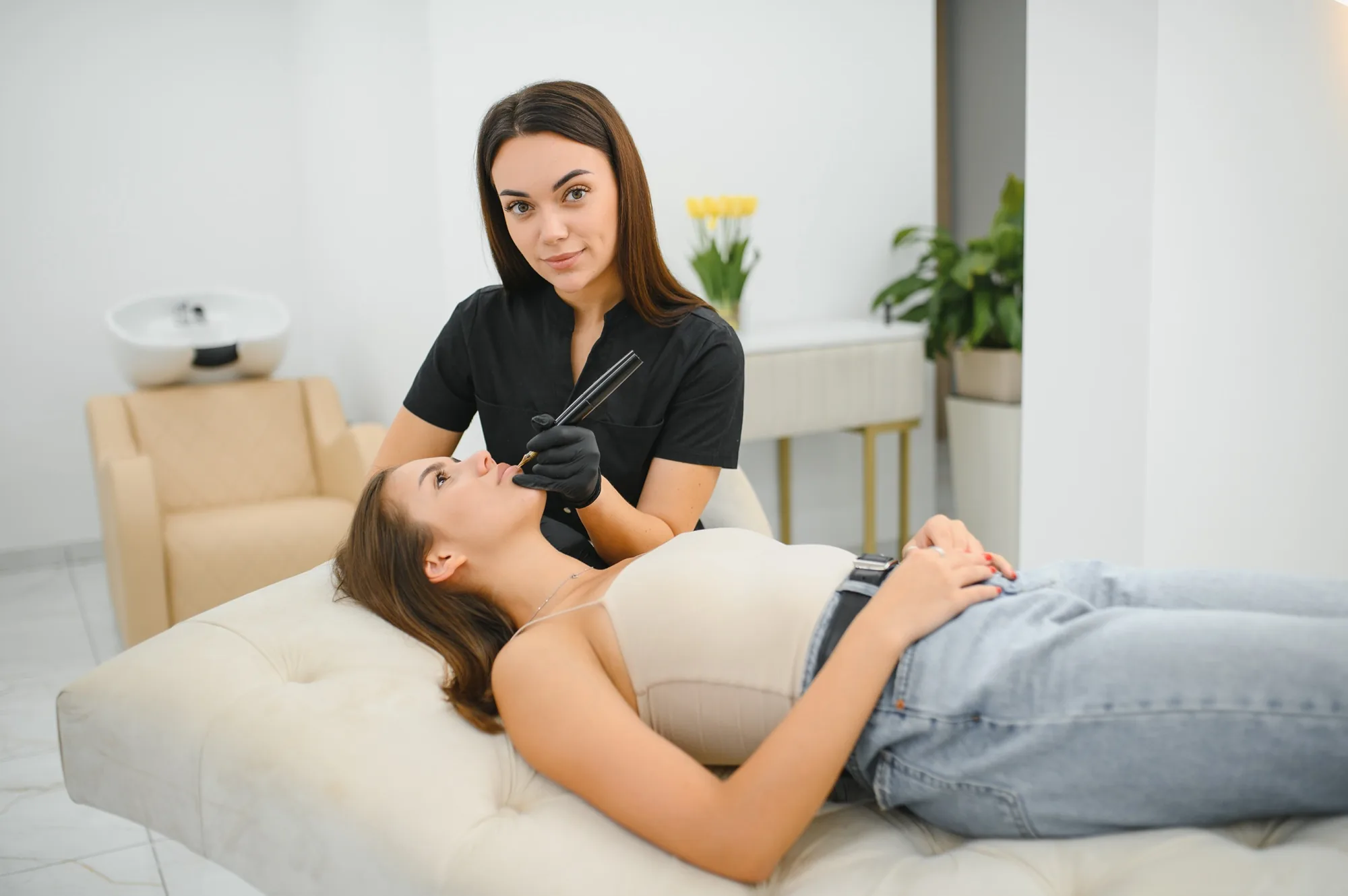
Muscle tone is the contributor most often left out of the conversation, partly because until recently there was no way to treat it. Emface combines radiofrequency with HIFES muscle stimulation, contracting the facial muscles that support the lower face far more intensely than voluntary movement can. In a 2026 multicenter study in the Journal of Cosmetic Dermatology, Robb and colleagues measured wrinkle improvement rising from about twenty percent immediately after a four-session course to roughly thirty-five percent three months later. Separate work by Kinney and colleagues found statistically significant lifting of facial soft tissue at each follow-up. Detail sits on our Emface treatment page.
This is also where a dental setting has a practical advantage. Jaw muscle function and clenching patterns affect the lower face, and they are already part of a dental examination. Which applications we treat is outlined on our services page.
Injectables and threads: what each one actually does
Filler does not lift jowls, and anyone offering it that way is describing the wrong mechanism. What it can do is rebuild structure that was lost, along the jawline or at the chin, so the jowl reads as less prominent by comparison. Botox has a narrow role here, mainly relaxing the muscles that pull the jawline downward. Neither addresses skin laxity. If you are weighing muscle stimulation against injectables, how Emface compares with Botox covers the difference in mechanism.
Thread lifts sit in a different category. Dissolvable sutures are placed under the skin to reposition tissue mechanically, which produces immediate change that fades as the threads absorb. Results vary considerably by practitioner and the procedure carries more risk than energy-based options. Ask specifically about complication rates and how long the effect held for previous patients.
How to decide, and when surgery is the honest answer
The honest framework is severity. Mild to moderate jowling with reasonable skin elasticity responds well to non-surgical treatment, often best with a combination that addresses more than one of the four underlying changes. Advanced laxity, with significant excess skin, does not. Energy and muscle work cannot remove tissue, and at that point a surgical consultation is the answer that respects your time and money.
The useful first step is finding out which of the four changes is driving yours, because that determines everything else. To have your jawline assessed in Orlando, call (689) 282-5599 or request a consultation.
Frequently asked questions
Can jowls go away without surgery?
Do facial exercises help jowls?
At what age do jowls usually start?
Does losing weight make jowls worse?
Which treatment works best for jowls?
How long do non-surgical jowl treatments last?
Medical note. This article is educational and is not a substitute for professional medical advice, diagnosis or treatment. Treatment suitability depends on the severity and cause of jowling in your individual case and can only be determined during an in-person evaluation. Advanced skin laxity may require surgical consultation, which non-surgical treatment cannot substitute for.