The short version
- The masseter enlarges the way any muscle does — through repeated heavy use, usually clenching.
- Botulinum toxin reduces thickness by roughly 30% at one to three months, with partial return by six.
- It remains an off-label use in the United States as of August 2026.
- Treating the muscle without identifying the driver means the enlargement returns.
- Emface is not a masseter reduction treatment — it strengthens rather than relaxes.
A jaw that has gradually become wider is one of the few facial changes that is not about aging. It is about muscle, and muscle behaves predictably: it grows when you work it and shrinks when you stop. That makes masseter hypertrophy unusually straightforward to explain and unusually easy to treat badly.
The mistake is treating the muscle as the problem. It is the result. Here is what is actually happening and what the evidence supports doing about it.
What the masseter is, and what hypertrophy looks like
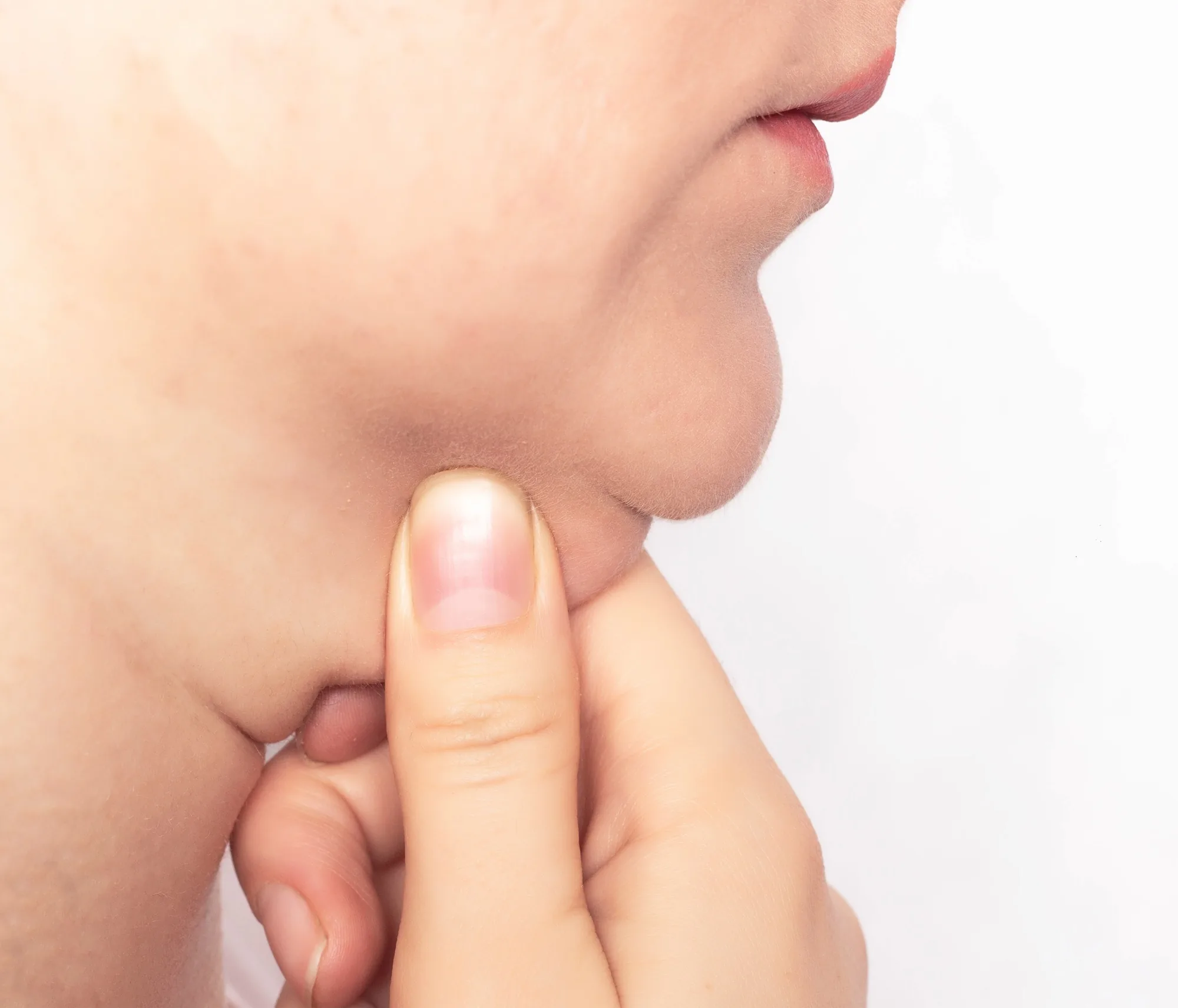
The masseter is the main jaw-closing muscle. It runs from the cheekbone down to the angle of the jaw, and it is one of the strongest muscles in the body relative to its size. When it enlarges, the widening appears at the lower rear corner of the face, which reads as a squarer, heavier jaw from the front and a fuller outline in profile.
Enlargement is often uneven, because most people favor one side when they chew or clench. Tenderness on waking, jaw fatigue by afternoon and a feeling of tightness at the angle are commonly reported alongside it. Some baseline masseter bulk is simply inherited and not pathological at all. What we assess is described on our treatments overview.
Why the muscle enlarges
Repetitive heavy loading is the mechanism. Sustained daytime clenching, nighttime grinding, habitual gum chewing and a consistently tough diet all qualify. The muscle responds by increasing in cross-section, exactly as a trained muscle elsewhere would. Stress and jaw posture influence how much clenching happens, though the relationship is more complicated than stress alone.
Bite mechanics matter too. How your teeth meet determines how the jaw muscles have to work to close, and an uneven or worn bite can recruit the masseter harder than necessary. That evaluation belongs in a dental setting, which is where our clinical team begins.

Measurement: why a photograph is not enough
Masseter thickness is measurable with ultrasound, at rest and during maximum clenching, and the two numbers are different. Published studies use exactly this method because visual assessment cannot distinguish muscle bulk from fat pad volume or from underlying bone shape, and those require completely different treatments.
It is worth asking whether a provider measures or estimates. Research comparing landmark-guided injection with ultrasound-guided injection in a split-face design found both reduced muscle thickness significantly, with the imaged approach offering real-time visualization of where the product is going. Neither is wrong, but knowing which one you are getting is useful.
Botulinum toxin: the research and the regulatory status
Botulinum toxin reduces the muscle's activity, and reduced activity leads to reduced bulk over weeks. The reduction is phasic: thickness drops first during clenching, then at rest, continuing for roughly the first three months. A 2025 study in Aesthetic Plastic Surgery using ultrasound elastography measured a reduction in masseter thickness of about twenty-nine to thirty-two percent at one to three months, with partial recovery of roughly forty-seven percent by six months.
Two things belong in the same breath. First, this is currently an off-label use in the United States. As of August 2026 the FDA has accepted a supplemental application from Allergan seeking approval for masseter muscle prominence, which would make it a fifth aesthetic indication if granted, but that review is ongoing. Off-label prescribing is legal and widely practiced; you should simply be told. Second, this muscle chews. A randomized triple-blinded trial published in Scientific Reports in 2024 measured masticatory performance alongside thickness, because reducing a chewing muscle has functional consequences worth discussing rather than assuming away. How Emface compares with Botox covers the broader difference between relaxing and strengthening muscle.
Treating the muscle without the driver is half the job
Here is the part that decides whether you are doing this once or indefinitely. Injection reduces the muscle. It does not stop the clenching. If the loading continues, the muscle rebuilds, which is consistent with the partial recovery the imaging studies document at six months.
So the useful sequence is to identify the driver first. That means examining how your teeth meet, looking for wear patterns on the enamel, and assessing whether jaw posture or bite mechanics are recruiting the muscle unnecessarily. Sometimes addressing that changes the trajectory on its own. Sometimes it runs alongside injection so the result holds longer. What we offer is listed on our services page.
What Emface does and does not do here
Worth being direct: Emface is not a masseter reduction treatment. It works on the muscles that lift the face, the brow and cheek elevators, and it strengthens them rather than relaxing them. Applying that logic to an already overdeveloped chewing muscle would be the wrong direction entirely. You can read what it does target on the Emface page.
Where the two conversations meet is the assessment. A widened jaw, jaw tension and the shape of the lower face are all reading the same anatomy, and separating what is muscle, what is bone and what is bite is the first step regardless of which treatment follows. To have that evaluated in Orlando, call (689) 282-5599 or request a consultation.
Frequently asked questions
Is masseter Botox FDA-approved?
How much does the muscle actually shrink?
Will my jaw go back to how it was?
Does reducing the masseter affect chewing?
How do I know if my wide jaw is muscle or bone?
Is a wider jaw always a problem?
Medical note. This article is educational and is not a substitute for professional medical advice, diagnosis or treatment. Masseter injection with botulinum toxin is an off-label use in the United States and requires evaluation, informed consent and prescription by a licensed provider. Reducing a primary chewing muscle has functional consequences that should be discussed individually.