The short version
- Four approaches: radiofrequency, RF plus targeted ultrasound, RF plus muscle stimulation, and microfocused ultrasound.
- They reach different depths and suit different problems.
- None of them remove tissue — that is the honest limit of the whole category.
- Central Florida sun exposure changes both your candidacy and your aftercare.
- Radiofrequency and ultrasound do not target pigment, so they suit all skin tones.
Search skin tightening in Orlando and you will find a dozen device names with nearly identical promises. The names are not the useful information. What separates these treatments is how deep the energy reaches and which tissue it acts on, and once you know that, the shortlist gets much shorter.
Here are the four approaches actually available, what each one does, and the local factor that most providers leave out of the conversation entirely.
What skin tightening means, and what it cannot do
Tightening means stimulating your skin to make new collagen and elastin so it behaves more firmly. Every non-surgical device works by controlled heating that triggers that repair response. None of them remove tissue, which is the honest limit of the whole category: if there is significant excess skin, energy will not take it away and a surgical consultation is the answer that saves you money.
Results build over months rather than weeks in every case, because collagen remodeling is slow. Which layers each treatment reaches is laid out on our treatments overview.
Radiofrequency: the baseline option
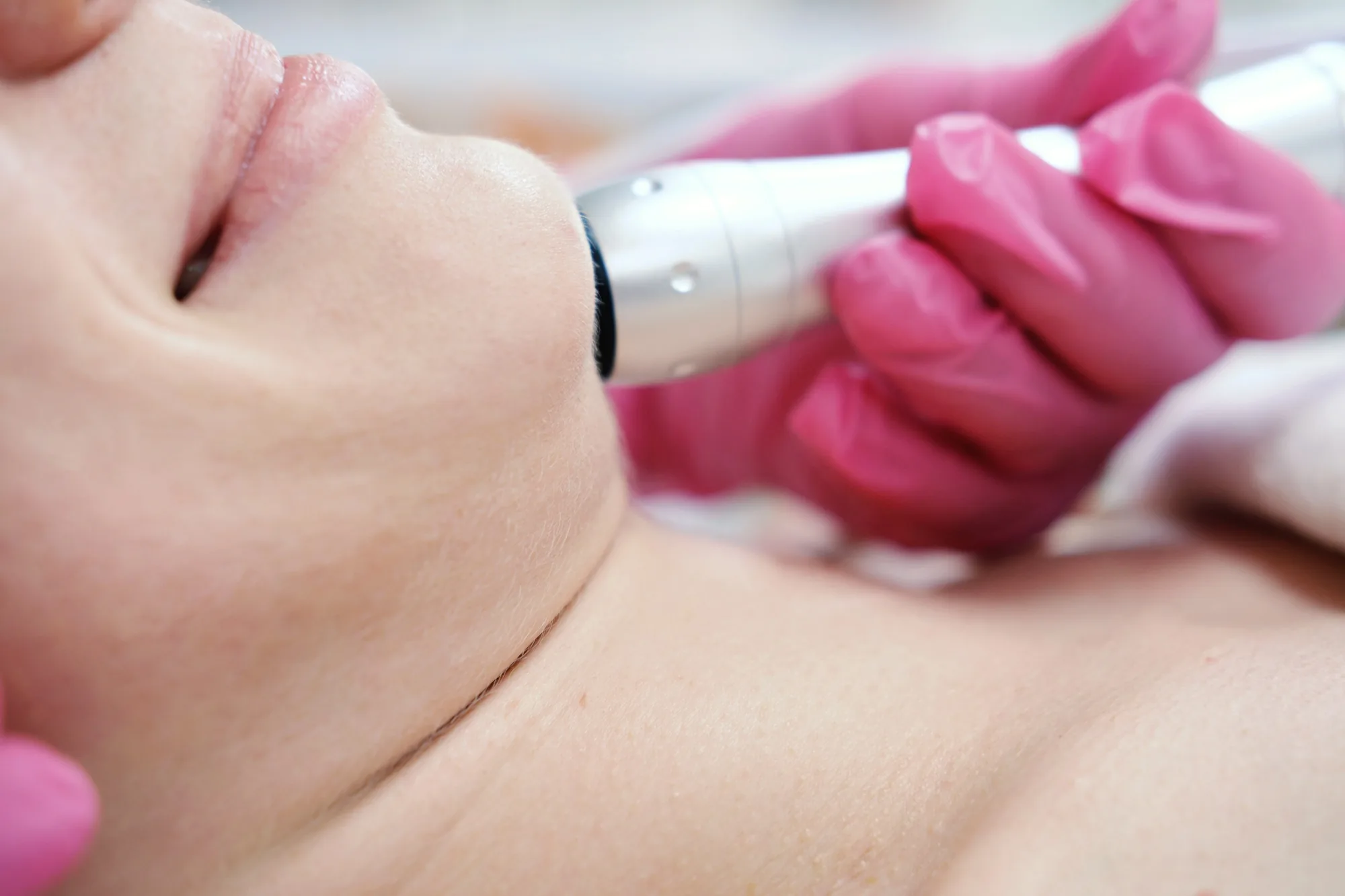
Monopolar and bipolar radiofrequency heat the dermis to a therapeutic temperature, prompting fibroblasts to produce collagen. It is the most established approach in the category, it works across all skin tones because it does not depend on pigment the way lasers do, and it is generally comfortable. Plans typically run as a series.
Radiofrequency alone is a reasonable choice for mild laxity and general firming. Its limitation is depth: it does not reach the connective tissue layer that deeper devices target, so structural sagging responds only partially.
Radiofrequency plus targeted ultrasound
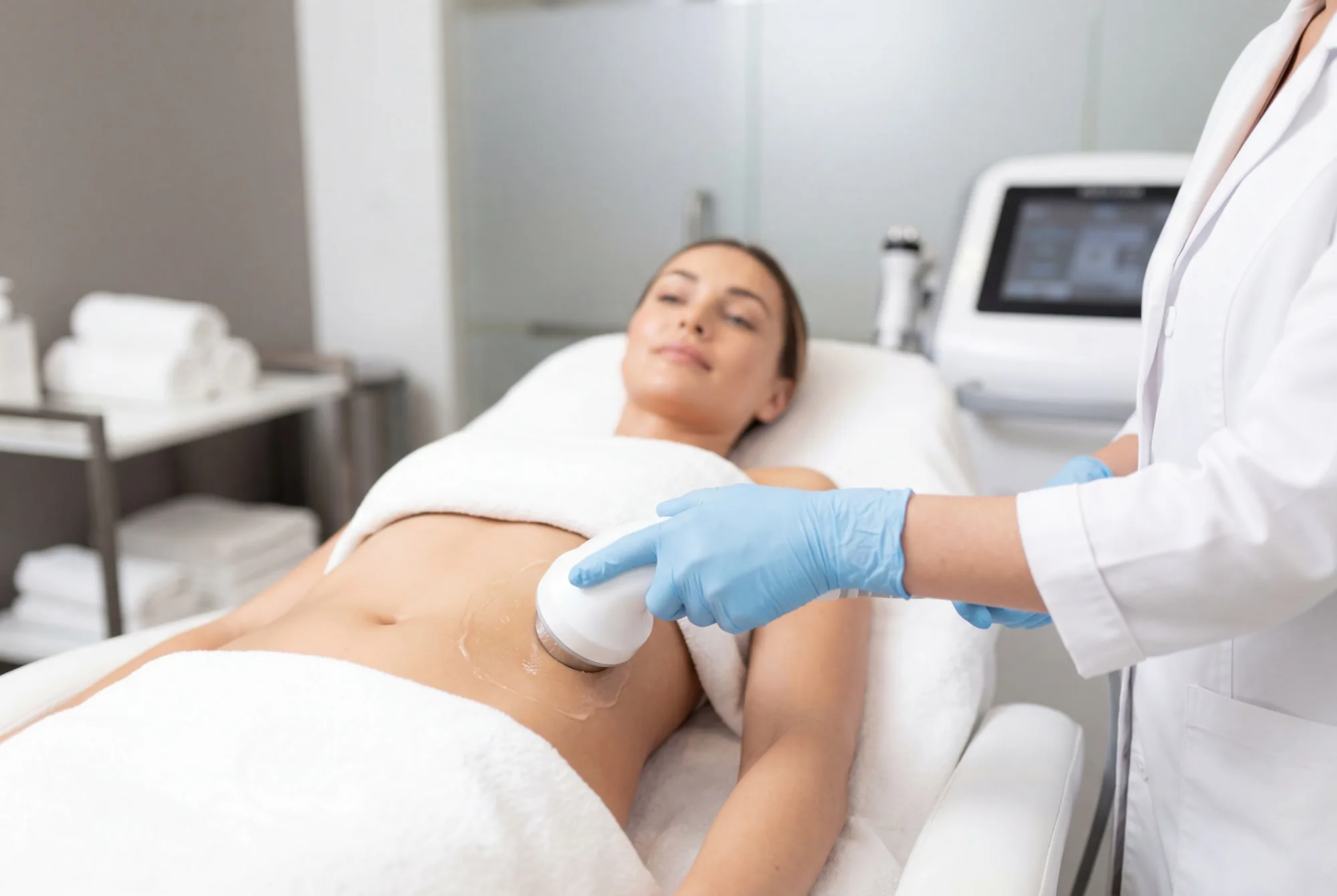
Exion, made by BTL Industries, emits monopolar radiofrequency and targeted ultrasound simultaneously. The distinguishing claim is about hyaluronic acid, the molecule that binds water in the skin. In a human histology study by Goldberg published in the Journal of Cosmetic Dermatology in 2026, tissue treated with both energies showed roughly 1.67 times higher hyaluronic acid density, while radiofrequency alone showed no significant change in that measure. The study was small, with seven subjects, and funded by the manufacturer. Detail sits on our Exion page.
This is the option to consider when the complaint is skin that looks thin, dull or crepey rather than skin that is sagging. It addresses quality more than lift.
Where muscle stimulation fits
Emface adds a second mechanism entirely: HIFES energy that contracts the facial muscles holding the face up, delivered alongside radiofrequency for the skin. Sagging is partly a muscle problem, and this is the only approach in the list that treats it. In a 2026 multicenter study in the Journal of Cosmetic Dermatology, Robb and colleagues measured wrinkle improvement rising from about twenty percent immediately after a four-session course to roughly thirty-five percent at three months. More on our Emface page.
Because this is a dental practice, jaw muscle function and clenching patterns are already part of how we assess the lower face. Which applications we treat is outlined on our services page, and how Emface compares with Botox covers where injectables sit alongside it.
Microfocused ultrasound and radiofrequency microneedling
Microfocused ultrasound with visualization, marketed as Ultherapy, reaches deepest. According to expert consensus published in the Journal of Cosmetic Dermatology, it delivers energy at set depths of 1.5, 3.0 and 4.5 millimeters and is FDA-cleared for lifting the brow, the area under the chin and the neck. Real-time imaging lets the provider see the tissue before treating. It is usually one longer session rather than a series, and we do not offer it, which is worth saying plainly.
Radiofrequency microneedling is a different trade-off again: needles create controlled injury while delivering radiofrequency below the surface. It reaches deeper than surface radiofrequency and is effective for texture and scarring alongside firming, but it involves genuine downtime and a healing period.
| Approach | What it targets | Typical plan | Best suited to |
|---|---|---|---|
| Radiofrequency | Dermis, collagen production | Series of sessions | Mild laxity, general firming, all skin tones |
| RF plus targeted ultrasound | Skin density, hyaluronic acid, texture | Four sessions, 7 to 14 days apart | Thin, dull or crepey skin rather than sagging |
| RF plus muscle stimulation | Facial muscle tone and overlying skin | Four sessions, about weekly | Loss of support, flattening cheeks, heavier brow |
| Microfocused ultrasound | Deep connective tissue | Usually one session | Structural laxity at jawline and neck |
| RF microneedling | Deeper dermis through the surface | Series, with recovery time | Texture and scarring alongside firming |
What living in Central Florida changes about your plan
This is the part that gets skipped. Central Florida delivers high ultraviolet exposure year round rather than seasonally, and ultraviolet light degrades the collagen and elastin these treatments are trying to rebuild. Practically, that means two things for anyone treating in Orlando.
First, photoaging tends to be further along here at any given age, so skin laxity in a forty-five-year-old Floridian may reflect more accumulated elastin damage than the same age elsewhere. That affects which approach makes sense and how much change is realistic. Second, aftercare matters more. Daily sun protection is what preserves the collagen you just paid to build, and in a climate with an outdoor lifestyle twelve months a year that is a harder habit than it sounds.
One useful piece of good news: radiofrequency and ultrasound do not target pigment the way lasers and intense pulsed light do, so they are generally appropriate across skin tones and do not carry the same concern about recently tanned skin. Still tell your provider about recent sun exposure, since it affects timing. To have your skin assessed here in Orlando, call (689) 282-5599 or request a consultation.
Frequently asked questions
Which skin tightening treatment is best?
Does skin tightening work on the neck and jawline?
Is skin tightening safe for darker skin tones?
Is there a best time of year to do this in Florida?
How long do results last?
How do I know if I need surgery instead?
Medical note. This article is educational and is not a substitute for professional medical advice, diagnosis or treatment. Non-surgical devices do not remove tissue, and significant skin laxity may require surgical consultation. Suitability, protocol and expected outcomes can only be determined during an in-person evaluation of your skin and health history.